Futurama
1956, upscaled
UnstableLandscapes, 2003–2008Tad TadlockCollege of the Arts, University of Florida
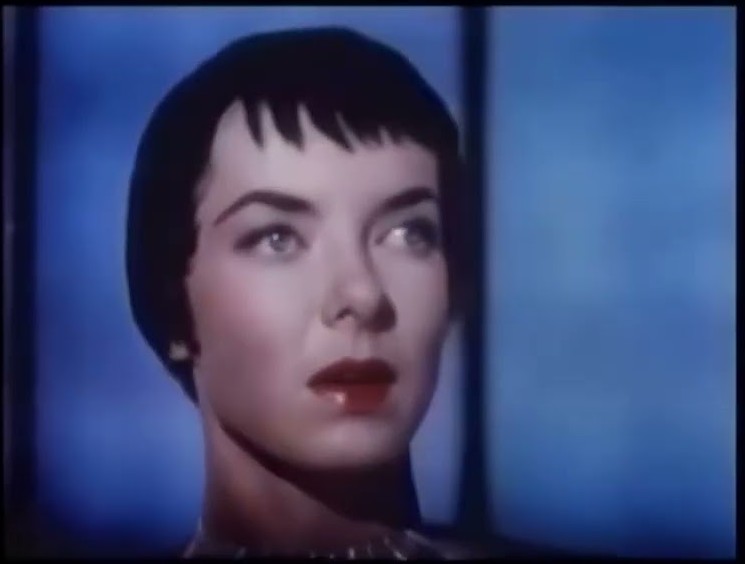
I made Futurama in 2003 at 320 × 240 pixels, a tiny frame carrying a speculative world. At the time I considered it a video-dance. It never entered the screen-dance festival circuit, simply because it was too small, and perhaps because it was procedurally generated. Upscaling was practically impossible then.
Decades later I have enhanced it with AI, to raise the resolution. I am still refining the process, and I am strangely attached to the artifacts: the blur, the compression noise, the retrofuturistic vibration. It feels like a temporal fold. A 1956 industrial utopia meets early digital experimentation, and meets contemporary generative AI.
It was one of my earliest attempts at generativity through rule systems, a computational structure that could autonomously mix, layer, and process found footage. Two video streams were randomly combined and transformed in Max/MSP/Jitter, a nonlinear video-dance that kept mutating. The choreography was not fixed. It was procedural.
The source is Design for Dreaming (1956), a General Motors promotional film, a glossy mid-century fantasy of cars, appliances, and techno-desire. I re-routed that corporate futurism through a rule-based improvisational engine.
An interactive version existed for several years. The upper layer becomes visible and audible only when a participant moves inside a spotlight. The body activates the system. The dance reveals the dream. The sound was composed for the clips.
This was the first piece in the series Dancing for Technology, in homage to the dancer Tad Tadlock, who appeared in many of these utopian propaganda films.
In retrospect, the work foreshadowed my ongoing investigations into generative systems, latent structures, and computational choreography. Before large language models. Before diffusion models. Just rules, randomness, and a desire to let the machine improvise. Sometimes the past was already rehearsing the future.
Presented with the College of the Arts and the Center for Arts, Migration, and Entrepreneurship at the University of Florida.